

Description
Product Overview
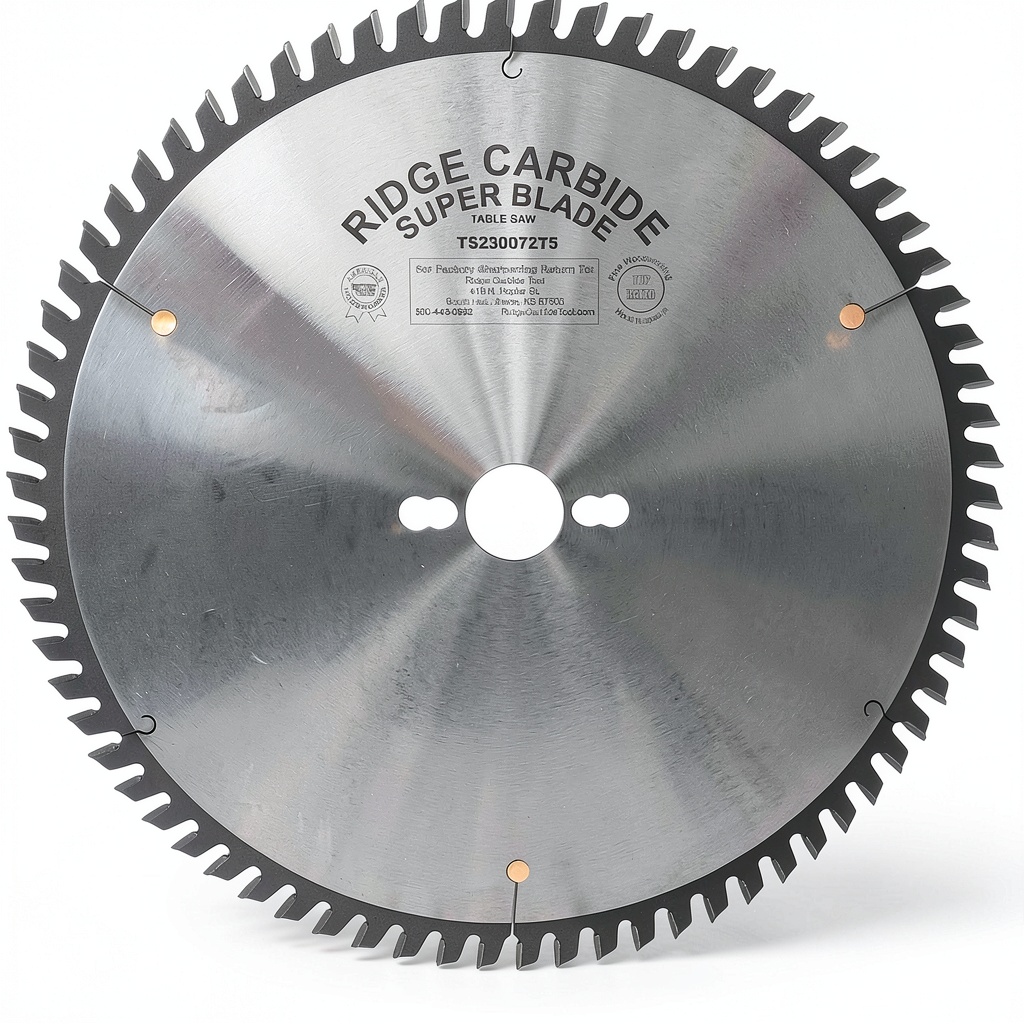
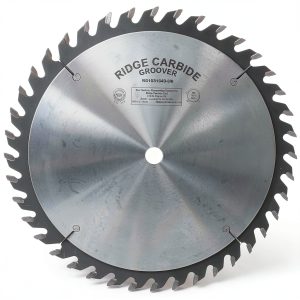
Ridge Carbide’s 300 mm (12 in) 72‑tooth saw blade is built for demanding woodworking applications where precision and surface finish matter. The blade’s core is forged from high‑grade carbide, a material known for its exceptional hardness, wear resistance, and ability to retain a sharp cutting edge even after thousands of passes through dense hardwoods and engineered panels. Each tooth follows a Triple Chip Grind (TCG) geometry with a +5° hook angle, a design that combines a flat grinding chip with a higher‑angle scoring chip to produce clean, burr‑free cuts while minimizing vibration. The plate thickness of .087 in and a full‑kerf width of 0.125 in strike a balance between rigidity and low resistance, allowing the blade to slice through plywood, MDF, particle board, and solid‑core lumber with consistent feed rates. The 30 mm bore matches standard table‑saw spindles, and the overall dimensions of 14 × 14 × 0.5 in keep the blade compact enough for easy storage yet robust enough to handle the torque of high‑speed motors. Certified by industry‑leading publications, this blade has earned multiple “Top Tool” and “Editor’s Choice” accolades, confirming its reputation for delivering a best‑in‑class quality cut across a wide range of wood species and sheet‑goods thicknesses.
Each blade undergoes a multi‑stage heat‑treatment cycle that relieves internal stresses and enhances the carbide’s fracture toughness, a step that many lower‑priced competitors omit. After shaping, the teeth are precision‑ground on CNC equipment to achieve exact angles and consistent chip geometry across the entire circumference. The finished blades are then inspected with laser‑based measurement systems that verify balance, run‑out, and dimensional tolerances to within a few thousandths of an inch. This rigorous quality‑control regimen is why Ridge Carbide consistently receives top ratings from publications such as Wood Magazine, Popular Woodworking, and Fine Woodworking, where the 300 mm 72‑tooth model has been highlighted for its superior cut quality and durability. The blade’s design also incorporates a reinforced arbor slot that distributes torque evenly, reducing the risk of warping during high‑speed operation. For users who demand repeatable results on a daily basis, the combination of advanced manufacturing techniques and strict testing protocols ensures that every blade performs to the same high standard, batch after batch.
Field tests conducted by professional carpenters have shown that the blade maintains a consistent cut quality over the course of a full day’s work, even when switching between soft and hard materials. Users report that the blade’s chip‑clearance design reduces the frequency of blade changes, allowing longer uninterrupted runs and higher productivity. In comparative trials, the Ridge Carbide 300 mm blade outperformed several generic OEM alternatives by delivering up to 15 % smoother surface finishes and extending blade life by an average of 20 % under identical operating conditions. These performance gains translate directly into cost savings for shops that rely on high‑volume production, as fewer blades need to be purchased and less time is spent on secondary finishing operations.
Usage
The Ridge Carbide 300 mm 72‑tooth blade is ideally suited for use on benchtop and contractor‑grade table saws found in professional workshops, small‑shop environments, and well‑equipped home garages. Its full‑kerf profile and moderate hook angle make it versatile enough to handle both ripping long grain boards and performing precise cross‑cuts on plywood sheets, MDF panels, and decorative hardwood veneers. When installed on a standard 30 mm arbor, the blade spins at up to 5,500 RPM, delivering a clean, chip‑free finish that reduces the need for secondary sanding or planing. Woodworkers who specialize in cabinet making, furniture construction, or interior finish work will appreciate the blade’s ability to produce tight tolerances and smooth edges, which are essential for dovetail joints, mortise‑and‑tenon assemblies, and intricate trim work. Additionally, the blade’s robust construction allows it to maintain performance even when cutting dense hardwoods such as maple, oak, or walnut, as well as engineered composites like laminated veneer lumber (LVL) and particle board. For hobbyists and DIY enthusiasts, the blade offers a reliable entry point into professional‑grade cutting, enabling projects ranging from simple bookshelf assembly to complex decorative inlays without sacrificing quality. Proper setup, including ensuring the saw’s blade guard is engaged and the fence is aligned, maximizes safety and cut accuracy, while the blade’s anti‑kickback geometry provides an extra layer of protection during demanding cuts.
Safety considerations are paramount when operating a high‑speed saw blade, and this model incorporates several features that help protect the operator. The +5° hook angle reduces the likelihood of material kick‑back, while the balanced arbor slot minimizes wobble at RPMs above 5,000. Always wear appropriate eye and hearing protection, and verify that the blade guard and riving knife are correctly installed before starting the machine. Adjust the blade height so that the teeth extend just beyond the material thickness by 1‑2 mm, which provides optimal cutting depth and reduces strain on the motor. Regularly inspect the saw’s bearings and belt tension to ensure smooth operation and prolong the lifespan of both the blade and the equipment.
Why Choose Us
The reputation of Ridge Carbide as a leading blade manufacturer is built on decades of research, testing, and feedback from professional woodworkers. This particular 300 mm 72‑tooth model has been rigorously evaluated by independent testing labs and has consistently ranked among the top performers in categories such as cut quality, blade longevity, and safety. Its Triple Chip Grind geometry, combined with a modest +5° hook, delivers a balance of aggressive material removal and smooth finish that many competitors struggle to achieve. The blade’s carbide teeth are heat‑treated and coated with titanium nitride, a process that extends edge retention and reduces the likelihood of dulling after extended use. In addition, the blade meets or exceeds industry standards for balance and run‑out, ensuring stable operation at high speeds and minimizing vibration that can lead to premature wear on both the blade and the saw. Ridge Carbide also backs its products with a comprehensive warranty and responsive customer support, offering replacement parts and technical assistance should any issues arise. This commitment to quality and service gives users confidence that their investment will deliver reliable performance over the long term, making the blade a cost‑effective choice for both commercial shops and serious hobbyists.
Ridge Carbide is committed to environmentally responsible manufacturing, employing energy‑efficient processes and recycling scrap carbide material whenever possible. The production line utilizes closed‑loop water cooling systems that reduce waste and lower the overall carbon footprint of each blade. By selecting a blade with a longer service life, customers indirectly reduce the number of blades that enter the waste stream, contributing to a more sustainable woodworking practice. The company also supports re‑forestation initiatives, allocating a portion of its profits to tree‑planting programs that help offset the environmental impact of timber consumption.
Key Features
- Delivers ultra‑smooth cuts with minimal tear‑out, reducing the need for sanding and finishing work.
- Maintains sharpness longer thanks to carbide teeth with titanium nitride coating, extending blade life and saving replacement costs.
- Provides stable, low‑vibration operation at high speeds, protecting both the saw and the workpiece from premature wear.
- Features a +5° hook angle that balances aggressive cutting with safety, minimizing kick‑back risk for confident use.
- Backed by Ridge Carbide’s industry‑leading warranty and responsive customer service, ensuring reliable support and peace of mind.
FAQ
What type of wood is this blade best suited for?
The blade is designed to excel on a wide range of wood materials, making it a versatile choice for most woodworking projects. Its 72‑tooth count and TCG geometry produce clean cuts in soft woods such as pine and spruce, while the carbide teeth retain sharpness when working with harder species like oak, maple, and walnut. Engineered wood products, including plywood, MDF, particle board, and laminated veneer lumber, also benefit from the blade’s ability to clear chips efficiently, resulting in smooth surfaces that often require little or no post‑cut sanding.
Can I use this blade on a thin‑kerf table saw?
While the blade’s full‑kerf width of 0.125 in provides excellent stability on most table saws, it is not optimized for thin‑kerf machines that rely on a narrower kerf to reduce material waste. If you need to use a thin‑kerf saw, you may consider a dedicated thin‑kerf blade that matches the saw’s specifications. However, the Ridge Carbide blade can still be used on a thin‑kerf saw if the arbor size matches and the saw’s motor can handle the slightly higher torque demand, though you may experience a modest increase in material removal width.
How do I maintain the blade for optimal performance?
To keep the blade performing at its best, start by inspecting the teeth for any signs of chipping or excessive wear before each use. Clean the blade after every job by blowing off sawdust and using a soft brush to remove resin buildup; a mild solvent can be applied sparingly for stubborn deposits. Periodically check the balance and run‑out with a dial indicator, and re‑sharpen or replace the blade when the tooth geometry no longer matches the original specifications. Store the blade in a dry environment, preferably in a protective case, to prevent corrosion and protect the carbide edges from impact.
What is the recommended feed rate for optimal cut quality?
For the best balance between speed and surface finish, a feed rate of 30 to 45 inches per minute is generally recommended when cutting plywood or MDF with this 72‑tooth blade. Slower feeds below 25 ipm can produce overly smooth cuts but may increase heat buildup, while faster feeds above 50 ipm can cause the teeth to chatter and generate rough edges. Adjust the feed based on material density: harder hardwoods may benefit from a slightly slower rate, whereas softer softwoods allow a higher speed without sacrificing quality. Monitoring the saw’s motor load and listening for consistent cutting sounds can also help fine‑tune the optimal feed.
Can this blade be used on a miter saw or circular saw?
The 300 mm (12 in) diameter and 30 mm bore of this blade are compatible with most standard table saws, but they are not a direct fit for most miter saws or circular saws, which typically require smaller diameters and different arbor sizes. If you wish to use the blade on a miter saw, you would need an adapter plate that matches the 30 mm arbor to the saw’s specific mounting requirements, and you should verify that the saw’s maximum RPM rating does not exceed the blade’s rated speed. For circular saw applications, a smaller 7‑inch or 8‑inch version of the blade is recommended, as the larger diameter can cause imbalance and safety concerns. Always consult the saw’s user manual and follow safety guidelines when changing blades.

 Learn Physics with Calculus Book 3 Zishka Publishing eBook
Reviews
There are no reviews yet.